Stage Shift
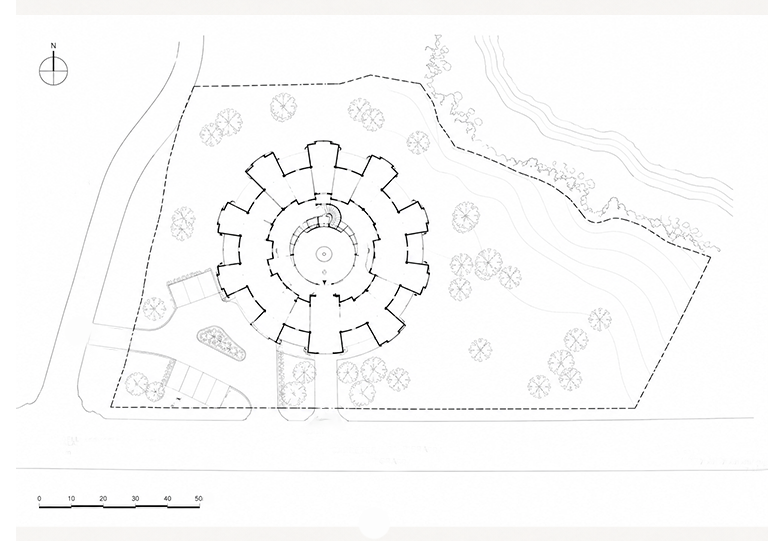
Purpose: Apartment and Theatre Complex for Behavioral Studies
Total Square Footage: 48,500 sq ft
Location: Granada, Spain
Year: 2025
Role:
Author and Prompt Designer
All conceptual designs and imagery were built with Midjourney AI and ChatGPT
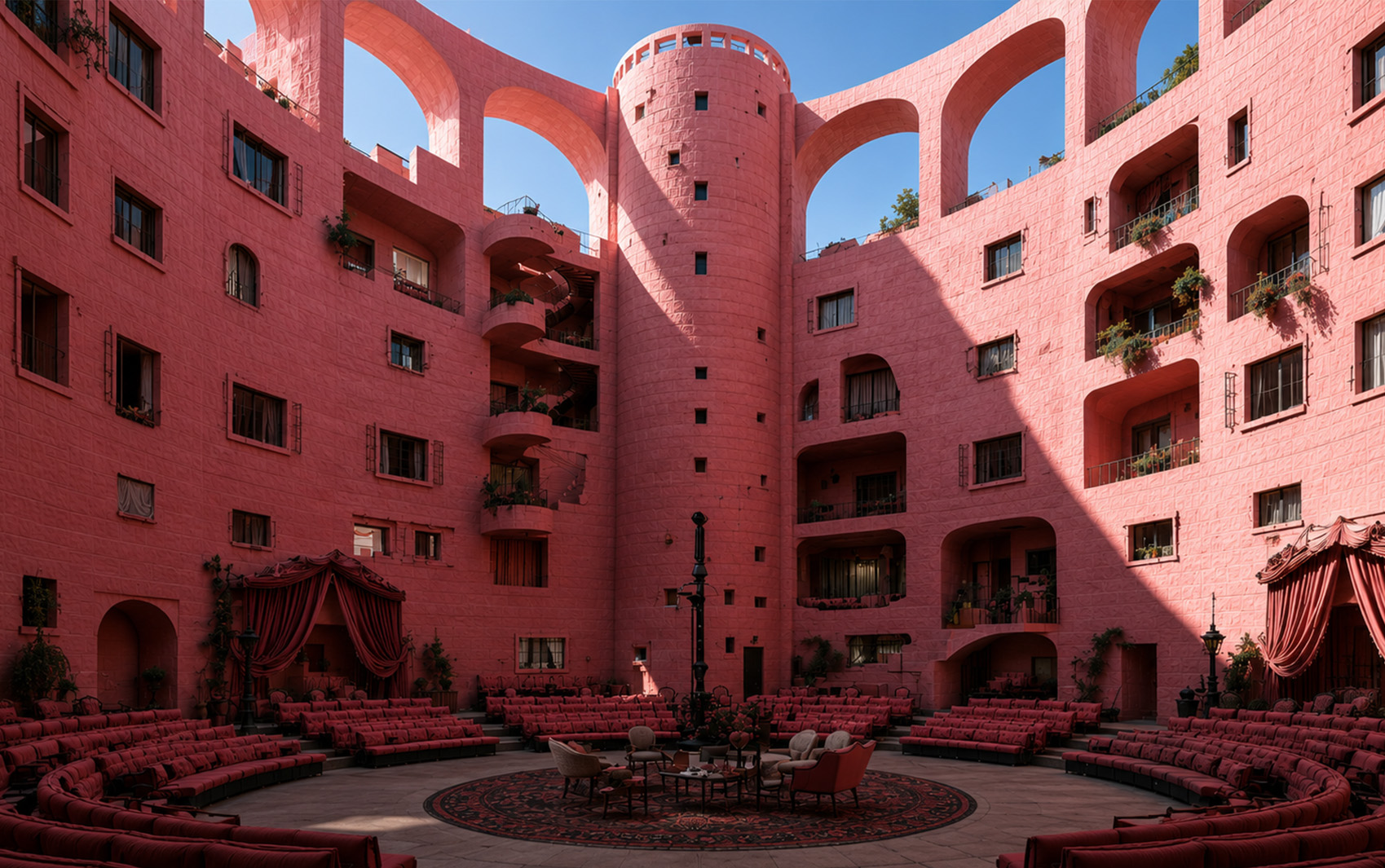
AI abstraction of the apartment + theatre complex.
AI as the co-designer of the complex's staging emphasizes the artiface behind performative behaviors.
Two concepts have informed this architectural illusion theory and complementary metafictional theatre design. (1) Humans categorize the world into schemas to reduce their cognitive load and (2) humans find meaning in unrelated fragments of information. Navigation through the built environment relies on cues derived from norms and visual demarcations that can separate the “public” and “private” realms. Yet, overlapping streams of multisensory stimuli create new associations that may alter the categorization process. As a result, the illusory realms or spaces that define what is “public” and “private” can dissolve.
“Public” realms may elicit unease while concealed “private” realms are often more comfortable. The risk of public humiliation produces the anxiety felt in unprotected “public” spaces or front-stages. Proper decorum is common in front-stage spaces, where people and buildings alike present pristine facades. Conversely, a feeling of safety pervades “private” spaces or back-stages. Personas and propriety are unnecessary in back-stage spaces, where the pressures of societal etiquette allay. The freedom in these spaces can increase occurrences of intimacy, neglect, and illicit acts.
Performance events oscillate between “public” and “private” realms. The stage and center seating areas are front-stage, while the vantage points surrounding the seats are back-stage. During the Arrival, the orchestra tunes up, and the impuissant attendees enter the venue in a choreographed procession. But, once darkness engulfs the space, the attendees have anonymity and become spectators. Thus, the Performance becomes a societal situation where voyeuristic behavior is acceptable. The Disbandment begins when the performance ends and the audience performs their vulnerable exit. The proposed panoptic, theatre-in-the-round design utilizes the three italicized transitional points above. It unveils the shifting power dynamic tied to illusory “public” and “private” realms.
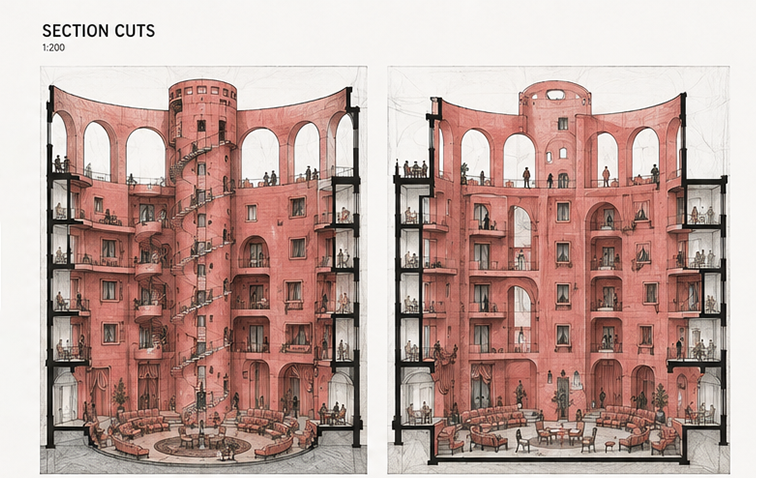
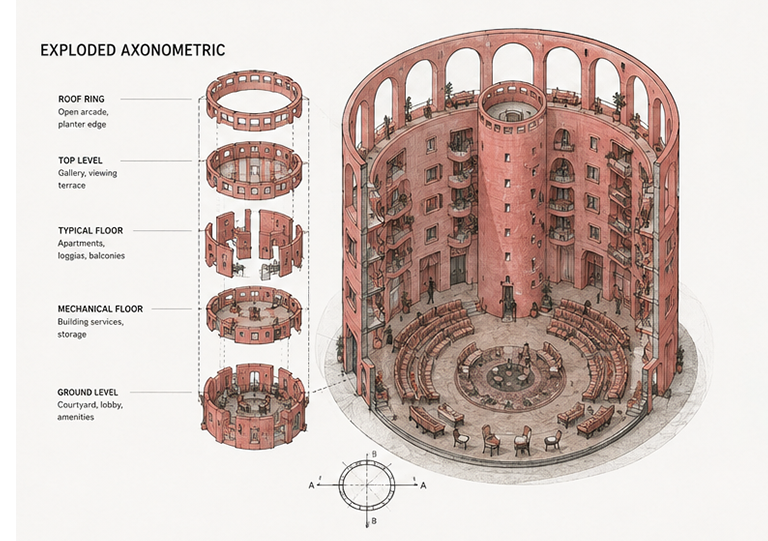
Inconspicuous, elevated apartment dwellers surround the primary theatre audience and performers. Their position in the conceptual theatre makes them seem omnipotent, but their power is ephemeral. Stage lights illuminate windows, exposing residents for those below to see. The implementation of “apartment surveillance” may influence residents’ performative behavior. As the primary performers comment on the residents, they assume spectator roles. Having an orthodox theatre nested within an apartment complex offers participants an opportunity to switch between being performers and spectators. People throughout the entire theatre enter an exchange of overhearing, observing, and sniffing. The theatre’s indeterminable stage unveils the illusory dichotomy between “public” and “private” space.
Maxwell Zaleski © 2021–2026